Christmas Owl Font Evaluation
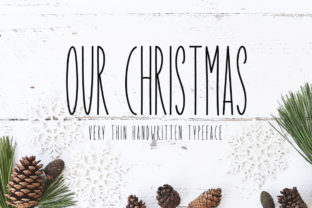
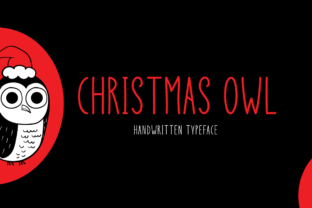
Christmas Owl is a thin, elegant display typeface designed for visual impact at larger sizes. It belongs to the category of decorative serif fonts—characterized by refined strokes, subtle contrast, and deliberate spacing—that prioritize aesthetic distinction over extended readability. Unlike system or web-safe fonts intended for body text, Christmas Owl serves a specific functional role: commanding attention in headlines, logos, invitations, and short-form graphic design contexts.
Why Designers Consider Christmas Owl
Designers often seek Christmas Owl when they need a typographic element that conveys sophistication, seasonal warmth, or quiet confidence without overt ornamentation. Its name suggests thematic resonance with holiday-related projects—such as greeting cards, boutique packaging, or event branding—but its stylistic neutrality means it functions well beyond December. The font’s slender proportions and balanced letterforms allow it to occupy visual space economically while maintaining presence. That makes it especially relevant for designers working within constrained layouts, such as social media banners, app splash screens, or minimalist print collateral.
Key Benefits
- Distinctive visual identity: Christmas Owl avoids common display-font clichés—no heavy shadows, no exaggerated serifs, no forced whimsy. Its subtlety supports brand differentiation where uniqueness matters more than familiarity.
- Scalability in display use: At sizes above 36pt, its fine strokes render cleanly across high-resolution screens and print outputs, assuming appropriate file formats (e.g., OpenType or WOFF2) and proper hinting.
- Pairing versatility: Its restrained elegance pairs effectively with neutral sans-serifs (e.g., Inter, Lato, or Helvetica Neue) for contrast in hierarchy—making it practical for title-and-body combinations in editorial or web layouts.
- Light weight emphasis: The thinness contributes to a sense of airiness and modernity, aligning with current design trends favoring minimalism and whitespace.
Tradeoffs and Practical Considerations
Christmas Owl is not optimized for all typographic tasks. Its primary limitation lies in legibility at small sizes or in low-contrast environments. Below 24pt—or when used on busy backgrounds, in long paragraphs, or on lower-DPI displays—the fine strokes may blur, fade, or become difficult to parse. This restricts its utility in UI components like navigation menus, form labels, or mobile interface text.
Additionally, Christmas Owl typically ships as a single weight (often “Regular” or “Thin”) with limited or no italic, bold, or condensed variants. That constrains typographic flexibility in projects requiring dynamic hierarchy or responsive scaling. Users expecting full OpenType features—such as stylistic alternates, ligatures, or multilingual support—should verify the specific version’s capabilities before licensing.
Performance is another factor: while not unusually large for a display font, embedding Christmas Owl on websites requires thoughtful implementation. Self-hosting with @font-face and subsetting (if supported) helps minimize load impact. Relying solely on third-party font services may introduce latency or render-blocking delays if not managed carefully.
Situations Where Christmas Owl Is a Strong Fit
Christmas Owl performs best in controlled, intentional applications. It excels when used sparingly and purposefully—for example:
- Printed holiday invitations or artisanal product labels where tactile quality and visual refinement are priorities;
- Branding elements for lifestyle, fashion, or wellness businesses seeking an understated yet memorable voice;
- Digital banners or hero sections where headline text appears alone or with ample surrounding space;
- Editorial magazine covers or chapter openers where typographic personality reinforces tone without competing with imagery.
In each case, the decision to use Christmas Owl reflects a deliberate choice to foreground aesthetic cohesion over functional breadth. Its effectiveness depends less on technical specifications and more on alignment with the project’s visual language and audience expectations.
When Alternatives May Be More Appropriate
Christmas Owl is less suitable when readability, adaptability, or accessibility take precedence. For digital interfaces requiring WCAG-compliant contrast and responsive behavior, system fonts or robust web fonts like Inter or IBM Plex Sans offer broader weight ranges, superior screen rendering, and built-in accessibility features.
For seasonal projects needing more explicit thematic cues—like snowflakes, holly motifs, or hand-drawn charm—other display fonts with higher visual character (e.g., Playfair Display, Cinzel, or Marcellus SC) may better serve expressive goals. Similarly, if multilingual support is required—including extended Latin, Cyrillic, or Greek characters—users should confirm whether the licensed version of Christmas Owl includes those glyphs before committing.
Making an Informed Decision
Evaluating Christmas Owl begins with clarifying intent. Ask: Is this for a short, high-impact phrase—or for recurring, functional text? Does the project emphasize tonal consistency over technical flexibility? Will the font appear primarily in static visuals, or must it adapt across devices and contexts?
Testing is essential. Render sample text at intended sizes and in real usage conditions: on target devices, against expected backgrounds, alongside companion fonts. Check contrast ratios using tools like the WebAIM Contrast Checker. Review licensing terms—not just for desktop use but also for web, app, or commercial redistribution, as restrictions vary between foundries.
Finally, consider longevity. A highly stylized font may feel fresh today but risk dating quickly. Christmas Owl’s restrained approach offers moderate future-proofing, but its narrow functional scope means it rarely stands alone in a full typographic system. Most successful implementations treat it as one carefully chosen voice—not the entire chorus.
Conclusion
Christmas Owl is a purpose-built tool, not a universal solution. Its value emerges most clearly when matched to specific design challenges: where elegance, economy of form, and quiet distinction matter more than versatility or scalability. Understanding its constraints—as much as its strengths—helps ensure it enhances rather than undermines a project’s goals. For designers weighing options, the question isn’t whether Christmas Owl is “good,” but whether its particular qualities solve the problem at hand.