Halders: A Fresh Approach to Typography
In the ever-evolving world of design, typography plays a crucial role in conveying messages effectively. One font that has been gaining attention for its unique and lively style is Halders. This display font, with its playful yet professional aesthetic, offers a versatile solution for various design needs. Whether you're working on a banner, logo, or headline, Halders can add a touch of creativity and personality to your project.
The Characteristics of Halders
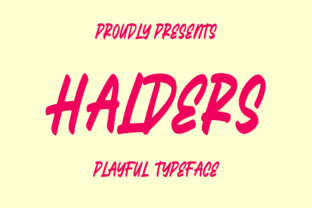
Halders is known for its distinct visual identity. The font features a combination of sharp angles and rounded edges, creating a sense of energy and movement. This blend of styles makes it stand out in a crowded design landscape. The letterforms are designed with a modern sensibility, allowing them to fit seamlessly into both digital and print media.
One of the most notable aspects of Halders is its readability. Despite its decorative elements, the font maintains a high level of legibility, especially at larger sizes. This makes it suitable for a wide range of applications, from signage to marketing materials. The spacing between characters is carefully balanced, ensuring that the text remains clear and easy to read.
Variations and Customization
Halders comes in multiple weights and styles, allowing designers to choose the perfect variant for their specific needs. Whether you need a bold version for a headline or a lighter weight for a subheading, there's a version of Halders that can meet your requirements. Additionally, some versions of the font include alternate characters and ligatures, providing further customization options.
Designers can also experiment with different color schemes and backgrounds to enhance the visual impact of Halders. The font's versatility allows it to adapt to various design themes, making it a valuable asset in any designer's toolkit.
Applications of Halders in Design
The practical applications of Halders are vast and varied. Its fresh style makes it ideal for use in banners, where it can capture attention and convey a message with flair. In the realm of logos, Halders can help create a memorable brand identity that stands out from the competition. The font's ability to evoke a sense of fun and creativity makes it particularly well-suited for brands targeting younger audiences or those in the entertainment industry.
Beyond traditional design elements, Halders can also be used in web design. When applied to headings or call-to-action buttons, it can add a dynamic element to a website's layout. The font's visual appeal can enhance user experience by making content more engaging and visually appealing.
Use Cases in Different Industries
Various industries have found innovative ways to incorporate Halders into their design strategies. For example, in the education sector, Halders can be used in promotional materials to make learning resources more inviting and approachable. In the retail industry, it can be utilized in store signage to create a cohesive and eye-catching brand presence.
Additionally, Halders is often used in the creative field, such as in illustrations or social media graphics. Its playful nature aligns well with the artistic expression required in these areas, allowing designers to push the boundaries of traditional typography.
Advantages of Using Halders
One of the primary advantages of using Halders is its ability to convey a sense of freshness and innovation. This makes it an excellent choice for projects that aim to communicate a modern and forward-thinking message. The font's unique characteristics can help differentiate a brand or design from others in the same space.
Another benefit of Halders is its flexibility. It can be used across different platforms and mediums, making it a reliable choice for designers who work on diverse projects. Whether you're designing for print, digital, or interactive media, Halders can adapt to meet the demands of each format.
Considerations for Effective Use
While Halders offers numerous benefits, it's important to consider how it will be used in practice. Designers should be mindful of the context in which the font is applied. For instance, while Halders may be ideal for headlines or logos, it might not be the best choice for body text due to its decorative nature.
Additionally, it's essential to test Halders in different environments to ensure that it performs well. Factors such as screen resolution, background color, and surrounding text can all affect how the font appears. By conducting thorough testing, designers can ensure that Halders enhances rather than detracts from the overall design.
Conclusion
Halders is more than just a font; it's a tool that can elevate the visual impact of any design project. With its unique blend of style and functionality, it offers a fresh perspective on typography that can resonate with a broad audience. Whether you're a professional designer or a hobbyist, incorporating Halders into your work can add a new dimension to your creative expression.