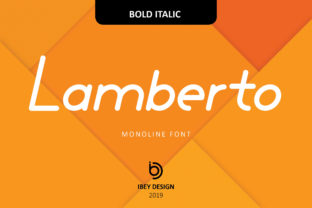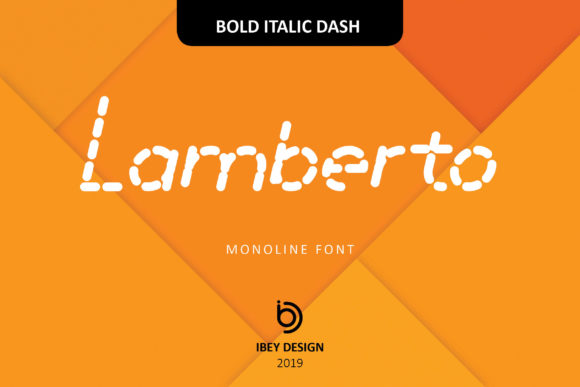
Lamberto Bold Italic Dash: A Strategic Tool for Intentional Visual Communication
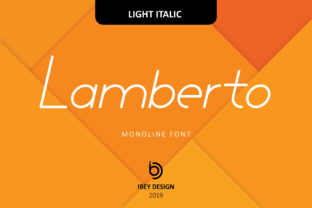
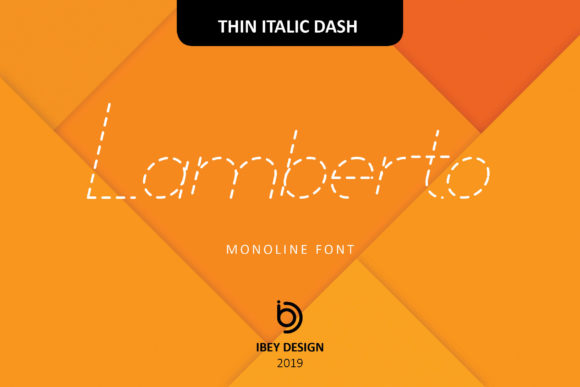
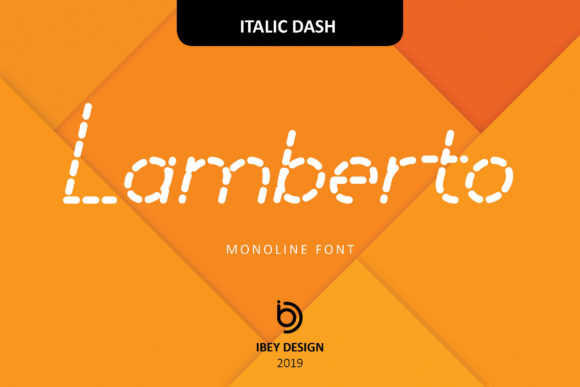
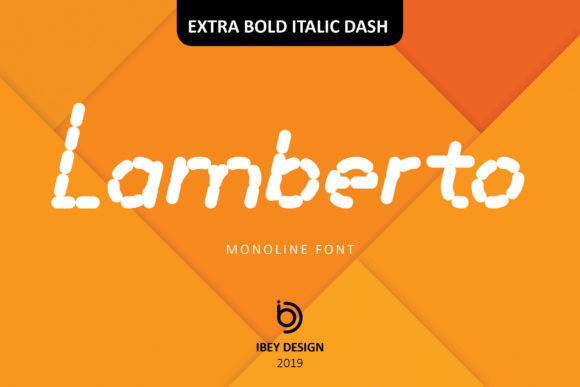
When you choose a typeface, you’re not selecting decoration—you’re making a decision with measurable consequences for clarity, perception, and impact. Lamberto Bold Italic Dash is not just another bold font. It’s a monoline display typeface built on deliberate contrast: ultra-bold weight paired with sharp italic slant and a distinctive dash motif that interrupts—and refocuses—attention. Its contemporary rigidity doesn’t mimic handwriting or calligraphy; it asserts presence without apology. That makes it unusually potent—but only when used with clear purpose.
Why This Font Earns Strategic Attention
Most display fonts fall into two camps: nostalgic (reviving vintage signage or editorial elegance) or neutral (designed to disappear behind content). Lamberto Bold Italic Dash occupies a third space: engineered for immediacy in high-signal environments. Its monoline construction eliminates optical variation—no thick-thin transitions, no serifs to soften edges. Every stroke carries equal visual weight. That consistency translates directly into legibility at distance, speed of recognition, and resistance to visual noise.
For entrepreneurs launching a product, marketers designing a campaign, or educators building a workshop identity, this isn’t about “looking cool.” It’s about reducing cognitive load for your audience. When someone sees Lamberto Bold Italic Dash on a banner, slide header, or app interface, their brain doesn’t pause to decode letterforms—it registers hierarchy, tone, and priority in under 500 milliseconds. That micro-second advantage compounds across touchpoints: faster comprehension, stronger recall, fewer misinterpretations.
Where It Delivers Measurable Value
- Brand Positioning: Use Lamberto Bold Italic Dash for primary logotypes or campaign slogans when you need to project confidence, modernity, and decisive action—not warmth or tradition. It signals competence over charm, clarity over complexity.
- Digital Interfaces: In dashboards, admin panels, or kiosk systems where users scan quickly, its monoline structure prevents blurring at small sizes or low-res displays—especially when rendered in bold italic variants.
- Print & Environmental Design: On signage, packaging, or exhibition walls, its dash motif creates subtle rhythm without competing with imagery. Unlike ornamental fonts, it doesn’t distract—it directs.
- Content Hierarchy: Reserve it for level-one headings only. Its intensity collapses subordination—if applied to body text or captions, it overwhelms rather than organizes.
What Happens When You Use It Without Strategy
Font choice becomes risky the moment it defaults to habit instead of intention. Lamberto Bold Italic Dash has zero tolerance for ambiguity. Apply it to a nonprofit’s annual report without adjusting contrast, spacing, or supporting typography—and readers may register urgency where empathy is required. Pair it with overly decorative UI elements or low-contrast backgrounds, and accessibility drops sharply. Its boldness isn’t forgiving: poor kerning, cramped line height, or mismatched weights in adjacent text will feel jarring, not dynamic.
This isn’t a flaw in the font. It’s a feature of its design philosophy. Lamberto Bold Italic Dash assumes the designer has already answered three questions: What action should the viewer take next? What emotion must remain unambiguous? What information must survive first-glance scanning? Without those answers, the font amplifies confusion—not clarity.
Practical Planning Before You Implement
- Map Your Critical Touchpoints: List every place your audience encounters your message—email subject lines, social thumbnails, landing page headers, slide decks, physical signage. Flag where attention is fleeting (e.g., Instagram carousels) versus sustained (e.g., whitepapers). Lamberto Bold Italic Dash belongs only where speed and emphasis are non-negotiable.
- Test Contrast Rigorously: Never assume black-on-white works universally. Check how Lamberto Bold Italic Dash renders on mobile screens in sunlight, projected in conference rooms, or printed on recycled stock. Its monoline nature means thin strokes can vanish if contrast falls below 4.5:1 (WCAG AA minimum).
- Define a Strict Typographic System: If you use Lamberto Bold Italic Dash for headlines, pair it with one highly legible, neutral sans-serif (e.g., Inter, Manrope, or IBM Plex Sans) for body text—never another bold or italic variant. No more than two type families. No mixing dashes or stylistic alternates unless they serve a documented user goal.
- Document Usage Rules, Not Just Preferences: Instead of “use for big titles,” write: “Lamberto Bold Italic Dash appears only in H1 tags, hero section headlines, and printed event banners ≥24pt. Never in email preheaders, form labels, or data tables.” Specificity prevents drift.
Real-World Decisions, Not Theoretical Advice
A freelance designer working with a fintech startup chose Lamberto Bold Italic Dash for their dashboard’s status alerts (“Transaction Confirmed”, “Security Lock Active”). Before launch, they tested with users aged 65+ and found the dash motif created hesitation—some interpreted it as a missing character. They retained the font but removed the dash from the italic variants for accessibility mode, switching to standard bold italic in those contexts. That wasn’t compromise. It was precision.
Another example: a university continuing education program used Lamberto Bold Italic Dash for course title cards—but only in their “Accelerated Certification” track, never in “Foundations” or “Professional Development” series. The visual distinction helped learners self-select based on pace and intensity before reading a single word of description. The font didn’t sell the course; it clarified intent.
Long-Term Value Lies in Discipline, Not Novelty
Typography isn’t branding wallpaper. It’s infrastructure. Lamberto Bold Italic Dash gains long-term value not because it’s new or trendy, but because its constraints force better decisions: tighter messaging, clearer priorities, more intentional layouts. Teams that adopt it successfully don’t celebrate the font—they notice improved click-through rates on CTAs, fewer support queries about unclear instructions, or faster onboarding times in training materials.
That outcome doesn’t emerge from downloading the font file. It emerges from aligning its properties—monoline uniformity, aggressive weight, directional slant—with concrete goals: reduce decision fatigue, accelerate recognition, eliminate interpretive ambiguity. When those goals shift, so should your typography. Holding onto Lamberto Bold Italic Dash past its strategic usefulness creates friction, not familiarity.
So ask yourself: Is this font helping your audience act—or just notice? Does it reflect what you stand for, or what you hope others think you stand for? And most critically: have you defined exactly where it stops being useful, so you know when to set it aside? Because the most powerful use of Lamberto Bold Italic Dash may be knowing when not to use it at all.